It was my last night in the British Virgin Islands. I was with Jeff and Michelle in Nanny Cay, on the island of Tortola, and we grabbed food at a sprawling beach restaurant with a partying vibe. The Puerto Rican flag was represented in the dozens, perhaps hundreds, streaming overhead and adorning every table. Shirts were being given away, and increasing numbers of people were donning them. I didn’t understand the phrase “Jangueo pa los Boricuas” on the back of the shirts. But I knew that “Boricuas” referred to Puerto Ricans, and having fallen in love with the island and its people just a week before, I started tapping people on the shoulder to learn what the phrase meant.
The third person I asked had an answer for me. What I learned filled my heart and gave me chills, but it didn’t surprise me. But that’s the end of the story.
Just a week earlier, I had been in San Juan, Puerto Rico, for the first time, and I was pinching myself—I’d turned up in the middle of history in the making.
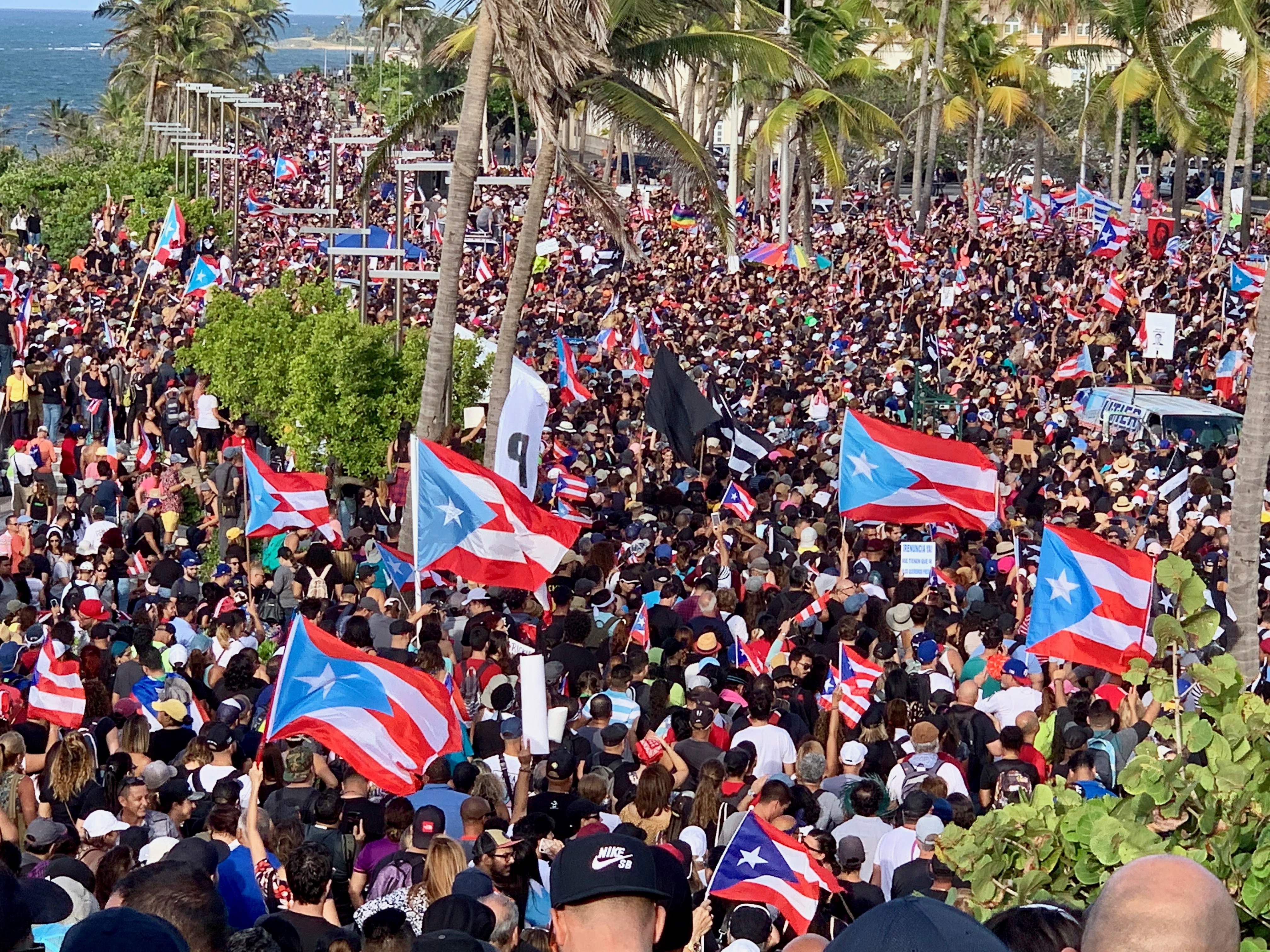
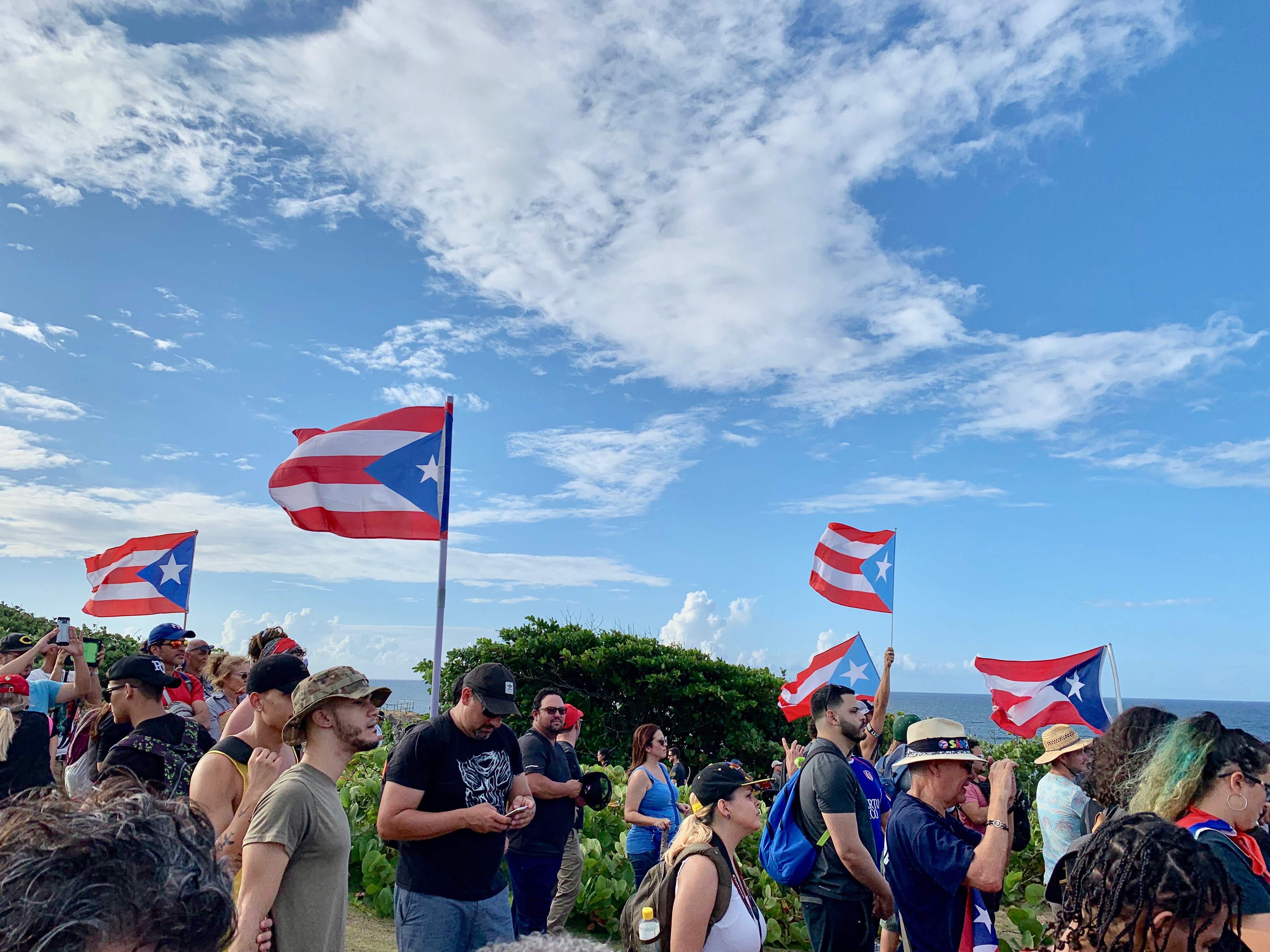 I’d arrived Wednesday, July 17, for just a two-night layover. My plane landed at 3, and within two hours I found myself among tens of thousands of protesters demanding the resignation of Governor Ricardo Rosselló. Rosselló’s corruption was widely known (including mismanagement of FEMA funds following Hurricane Maria), and there was plenty of distrust and discontent among Puerto Ricans. In fact, on July 10, six higher-ups in Rosselló’s administration were indicted for money laundering, conspiracy, and wire fraud—32 counts worth. The Education Secretary (Yes, the EDUCATION secretary. Sigh.) was among those arrested, being accused of directing as much as $15.5 million in federal funds toward politically linked contractors.
Then along came “Chatgate,” or “Rickyleaks,” or “Telegramgate”—an 899-page private chat, among Rosselló and his inner circle, released by the Center for Investigative Journalism. The chats were riddled with vulgarities, but that was the least of it. They were racist, homophobic, and misogynistic. He called the mayor of San Juan “puta,” a whore. He mocked an obese man he’d posed with in a photo. And then there were the references to Hurricane Maria victims.
You may remember the huge controversy over the death toll wreaked by Maria. Three months after the hurricane left the island reeling and gasping, the government raised the official death count to 64. But multiple studies, including one from Harvard University, estimate the death toll to be far, far higher, including deaths that occurred as an indirect result of the hurricane—carbon monoxide poisoning, for instance, or dying from a fall during the storm. Many bodies were cremated before first being examined, and so those were not included in the death toll either. The number that many Puerto Ricans have held onto is 4,645, the midpoint estimate from the Harvard study.
Of all things, in Rosselló’s despicable chat, the cronies mocked Maria’s victims, many of whom a year later—a YEAR later—remained in morgues awaiting enough forensic pathologists to examine them. When critics of the administration probed about the budget for pathologists, one official, Christian Sobrino Vega, joked in the chat, “Now that we are on the subject, don’t we have some cadavers to feed our crows?” (Crows apparently being the critics). He added, “Clearly they need attention.” He was among the first to resign following the leaked chats.
This goes beyond politics—this is about humanity.
The Puerto Rican people had had enough. Artists Ricky Martin, Bad Bunny, Residente, and others called for crowds to gather that Wednesday night, and the crowds showed up. (Comically, since Ricky Martin was among the organizers, women were told in jest to keep their swooning for “Ricky” under control, lest the nefarious governor “Ricky” decide to claim the professions of love for himself. People were also protective of Martin—he was the target of homophobic barbs in the chat.) Actor Benicio Del Toro was out there somewhere as well.
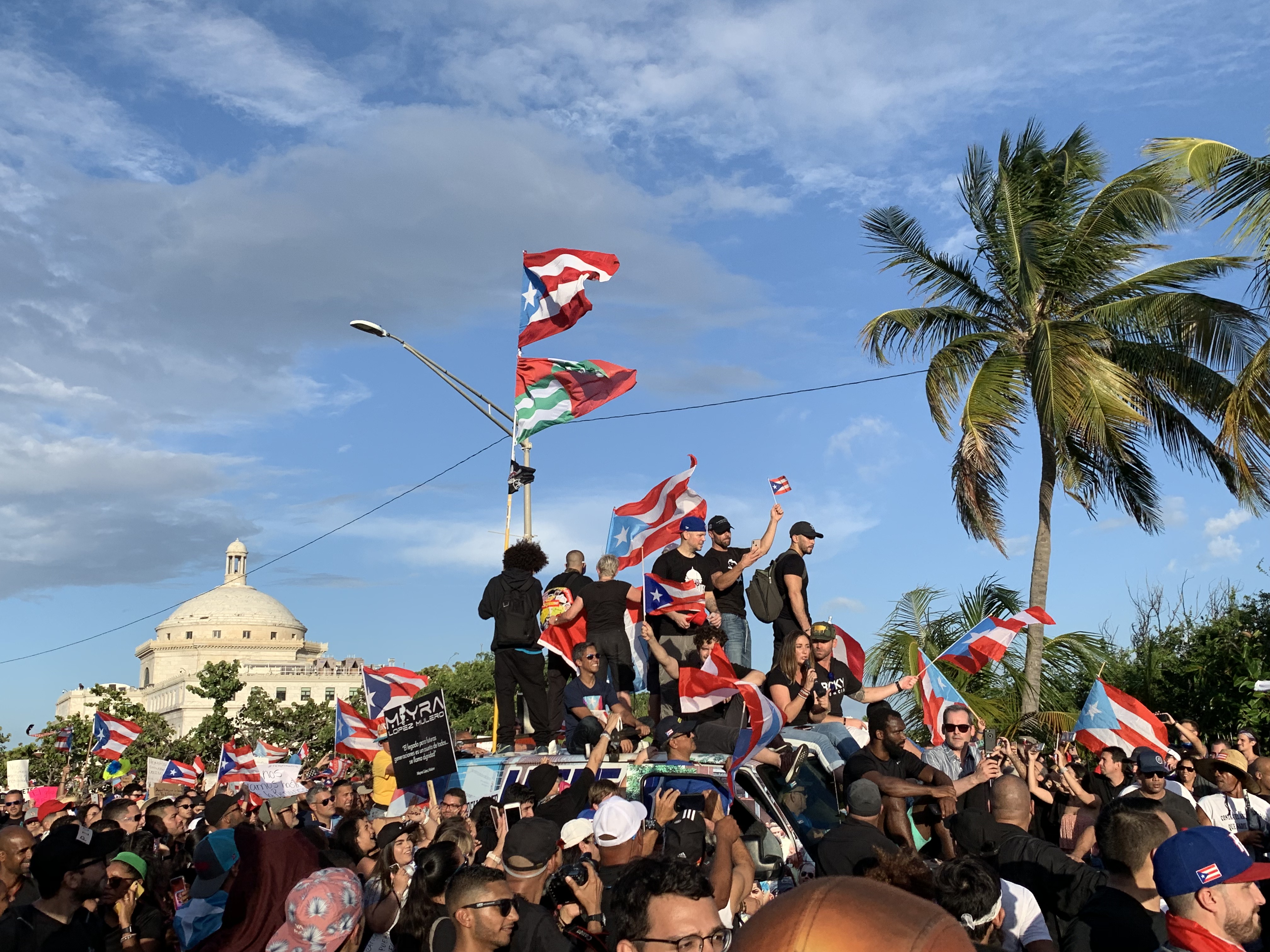
I stood at the top of a hill, and I was mesmerized and wrapped up in the incredible beauty of it all. In the late afternoon sun, palm trees towered over the people, who were framed by the capitol on one side and the ocean on the other. There was a lovely breeze just stiff enough to keep the red, white, and blue flags proudly waving. But there were black-and-white flags too—a country in mourning over a corrupt government. There was passion, music, and beat. There were megaphones, there was laughter, and so many angry and witty and simple protest signs. A helicopter circled continuously overhead. Ricky Martin and other artists stood atop trucks that drove through, and yes, there was swooning. Pride flags marched by. It was many days before “Ricky! Renuncia!” (“Ricky, Resign!”) didn’t periodically find its rhythm in my head (and in my heart, to be honest).


I’d been traveling solo for three weeks. As tremendous as that march would have been even had I experienced it on my own, I was so fortunate—I think I even get to apply that wonderful word “serendipity”—to count myself among friends that night.
Though the roads into Old San Juan (which is an island, connected to the mainland by three bridges) had been closed at 2 p.m. in anticipation of the 5 p.m. protest, local traffic and taxis were permitted through. In my taxi from the airport, we passed people with signs and flags walking from miles away toward the capitol. Despite loads of traffic, I made it to my AirBnB guest house by about 4. I was warmly welcomed by my host Danny, and before he even took me to my room in his amazing home, he had invited me to join him and his friends at the march. “We’re leaving at 5, come with us!” He fed me fish broth (a delicious soup of fish, potatoes, sweet potatoes, and more) before we headed on our way.
 While walking toward the capitol, we met up with his friends—most from an acting troupe focused on Puerto Rican history and politics—and they quickly adopted me as “sister” that night. The energy in the crowd only grew. I didn’t need to be told, but I was: This would become a major historical event in Puerto Rico. Many of my new friends were pinching themselves as well—they were overcome by what they were coming together to accomplish. I became a bit of a sounding board that night: You do realize how big this is, right? What do you think of all of this? This is amazing, they said, old and young, the way people have come together. And it was.
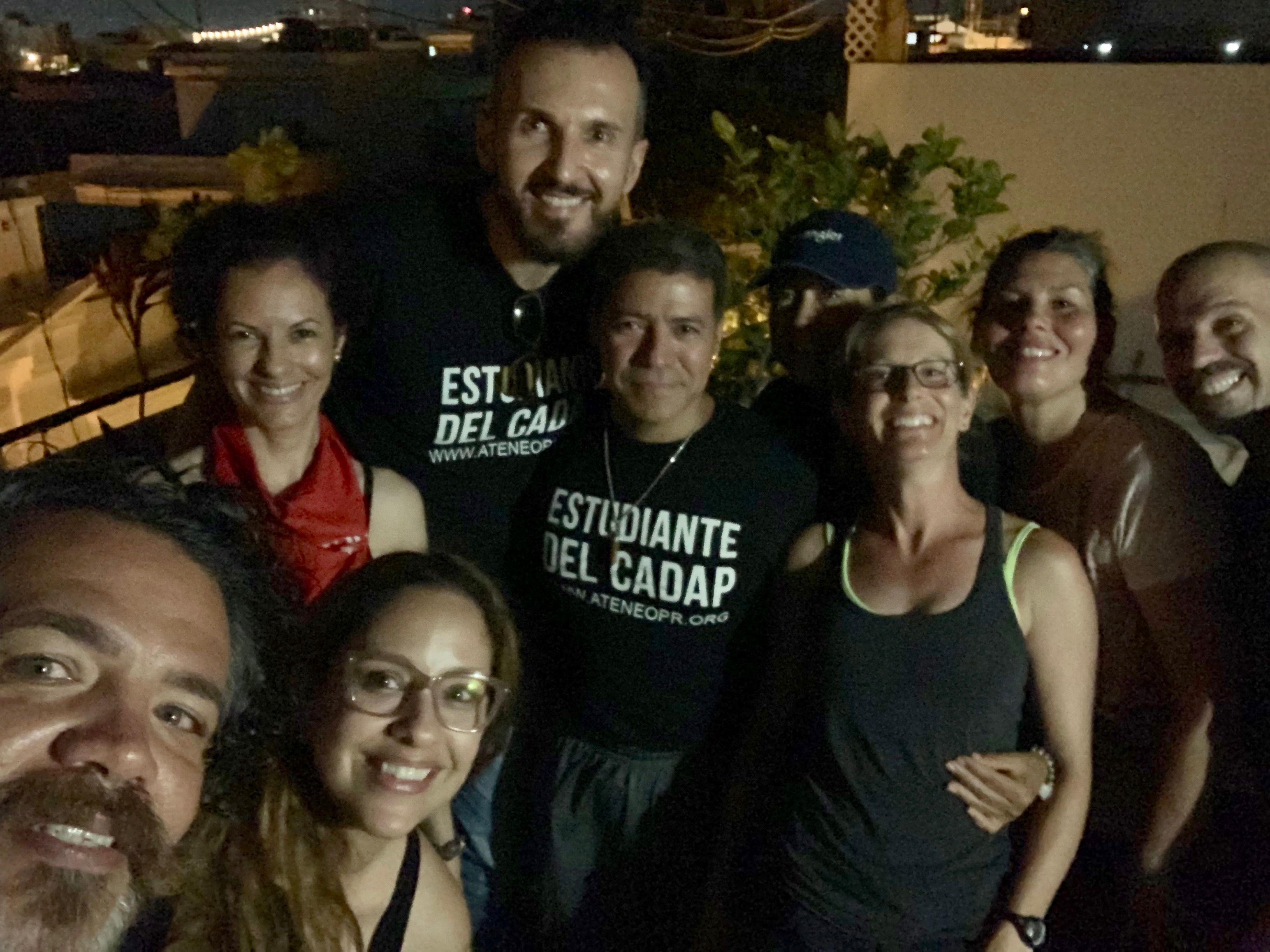 Had I been on my own that day I would still have been drawn in and absolutely captivated. But sometimes when you’re alone in a crowd it can be much lonelier than when you’re simply on your own, and I didn’t have to push against that loneliness that evening. Without my new comrades, I likely would have felt like more of an outsider, been more of an observer, despite the warmth of the crowd. I wouldn’t have had translations for the things I didn’t understand, people to name the musicians riding on the trucks, people to share their reflections and pizza in Danny’s living room and on his terrace. (It dawned on me, too, that I would have been digging into my stash of energy bars, both with thousands of people lodged into the small Old San Juan and with many restaurants closed and boarded up.)
For a time after the march that night, Danny’s friends were scattered around his living room-cum-art museum (he’s a collector), some on their backs on the floor or on the steps at the open front door, almost everyone scanning news and social media for any information about the march. What was the turnout? What was the reaction? Any words from Rosselló? What next? When one friend returned with the pizza, we came together again talking about the significance and the power of the marches. We had not walked all the way to the governor’s mansion. There were so many demonstrators, we might have become quite trapped. And the tear gas and rubber bullets did come that night for those who stayed late and pushed the limits—what those limits were, I didn’t witness. (While many claim that protesters remained peaceful, The New York Times reported, with accompanying photos, that on a previous night fires were set in the trash cans separating the police from demonstrators.)
As I walked Old San Juan over the next couple of days, small protests continued, and more businesses got boarded up. A Puerto Rican flag covered the menu display outside one restaurant, I’m sure both to show support and in hopes of preventing the shattering of the glass. At night spray paint scarred walls, in the morning it got painted over with swaths of white paint, and at night it appeared again. There was plenty of expletive-filled graffiti targeting the police, who stood in twos and threes talking on corners during the day. Workers scrubbed away at the fountain at the base of the Christopher Columbus statue in the Plaza Colón.


The number 4,645—Maria’s human toll—became easy to remember: it was on signs, graffitied on walls, drawn on foreheads at the protests. In “Afilando Los Cuchillos” (“Sharpening the Knives”), a song aimed at the governor and released the day of the protest I attended, musicians Residente, Bad Bunny, and iLe sing: “Your apologies are drowned with rain water in houses that still don’t have a roof. … This is so you wake up, this goes for the 4,645 deaths.” I photographed a memorial of shoes not far from the mansion.


Thursday night I wandered. With exception of the small raucous of protesters congregated near the governor’s mansion, the town was quiet, most restaurants closed. After walking and observing the protest from multiple edges, I gratefully found an open door and a seat at the bar of Greengos Caribbean Cantina a few blocks from the mansion. And though it was among the small number of establishments open, it was remarkably quiet, and Rene, the bartender, confirmed that it was usually filled and lively.


Rene is one of a few people I spoke with about the upcoming Monday protest. He felt that the Monday march was not an option, but a duty. His parents, in their 70s, said they also needed to attend, despite the extremely long walk and heat. “I’m going to get them there,” he said. And sure enough, Monday’s protest was reported to have hundreds of thousands of demonstrators. (Puerto Rico has around 3.2 million people, showing a record decline last year, largely attributed to migration following the hurricane.)
One topic that cropped up in multiple conversations was the long-term struggles with health after Maria, even for those who were seemingly spared of harm. One woman was trying to lose weight that she’d gained in the months after Maria. It was much more difficult to keep up with her regular exercise, she explained. Gyms were closed, and the water was contaminated, so no swimming. (And, of course, exercise is often out the door anyway in times of trauma.) A bartender I spoke with had given up smoking a year before Maria barreled through. In the stress, he picked it back up and is still struggling to quit.
I was sad to see graffiti over the walls of so many businesses and residences. But Danny told me of the reaction of one resident after the walls of his home were vandalized: The government has taken far more from me than this, he said.
A constant police barricade blocked the street to the governor’s mansion, and Friday morning I watched as a young girl handed up blue flowers to one officer, who passed them down the line. Many demonstrators were angry at the police, and some cried out for the cops to join the protest movement. I don’t have a good sense of where law enforcement fell in their support of the administration, the reports varied so much (as the police probably did). I wondered frequently about their experiences and—I hope—angst. When at the barricade, they frequently stood as statues, staring straight ahead, chins raised slightly. When it was a bit more quiet, they seemed to relax a bit.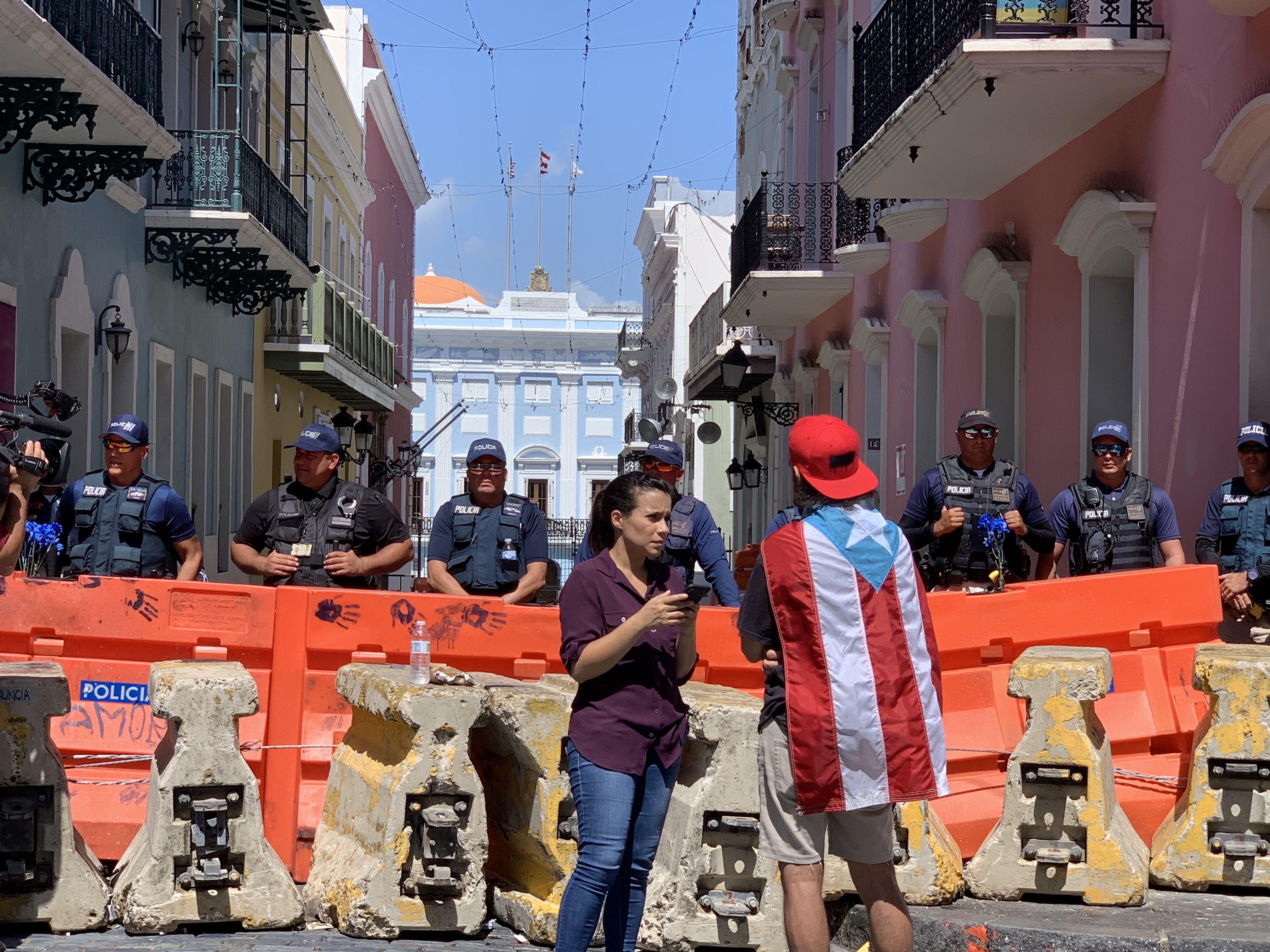
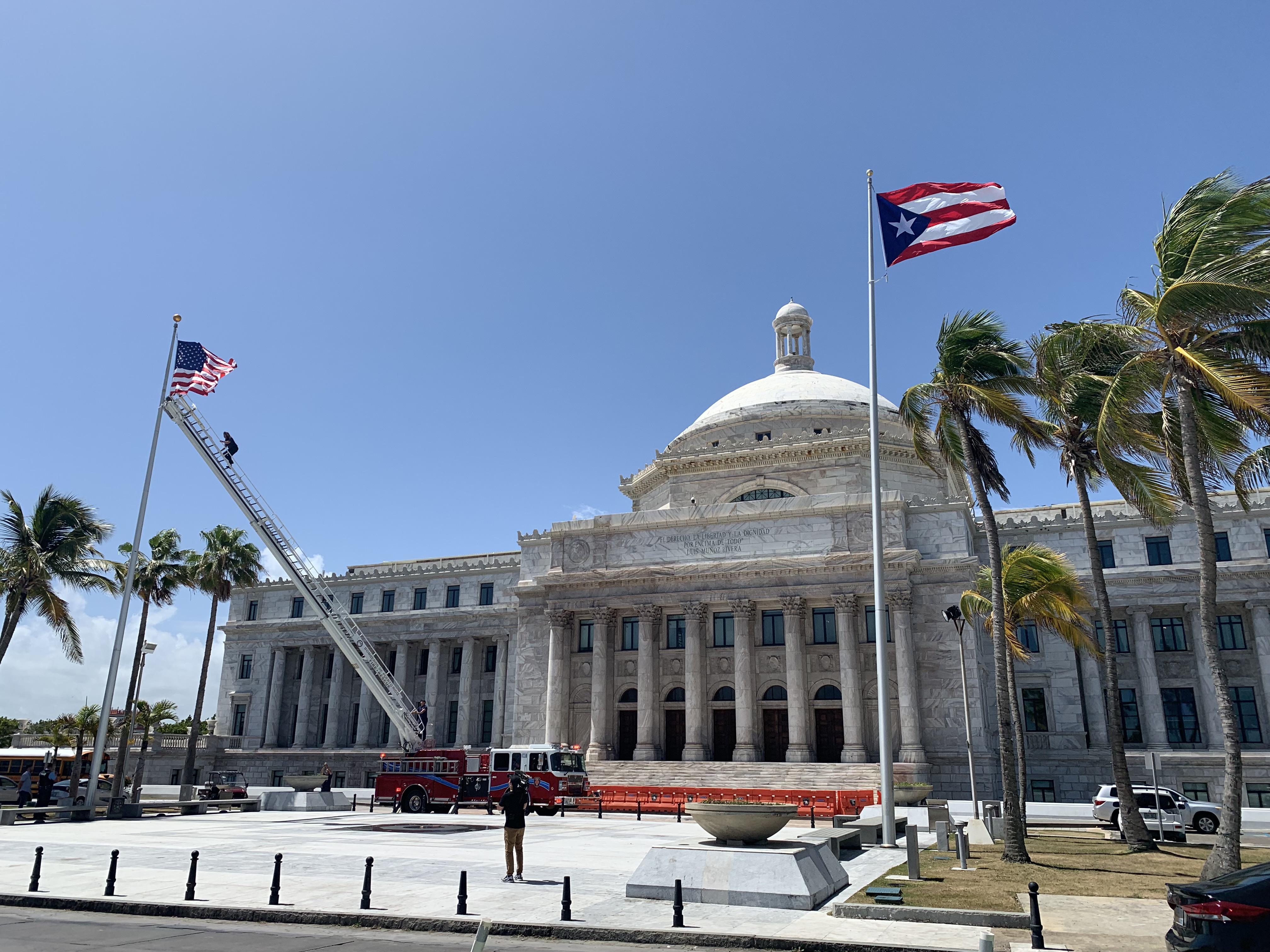 Before heading to the airport for a mid-afternoon flight, I walked back over to the capitol, which I’d only seen surrounded by thousands of people a couple days prior. I watched as workers lowered first the American, then the Puerto Rican flag. (I’d watched Wednesday as protesters had tried to take down the American flag.) I then talked with two American tourists, who asked if the streets were always so quiet. I don’t know, I said, but I think not. Among other factors, like boarded-up businesses, cruise ships had canceled stops in Puerto Rico due to the unrest.
Before wrapping up my account of Puerto Rico, I’d be remiss if I didn’t mention my quick trip to El Yunque, the island’s fantastic rainforest (the only tropical rainforest in the U.S. Forest Service system). I took a morning tour with a short hike that included some shallow stream crossings, some scrambling up boulders, some enticing natural water slides, and a super-fun rope swing that I tested out a few times. I heard the coqui, a small frog whose call begins as the sun sets and ends at dawn. I learned that the coqui’s call is dear to the hearts of Puerto Ricans, who miss its “lullaby” if they move from the island. My trip to the rainforest was fantastic, but I’ll mostly let the photos speak for my experience there.


And a few photos from that day, to and from the forest… (Yes, that is a 32-ounce mojito.)


I’d also be neglectful to not mention a couple of recommendations should you find yourself with a plane ticket to Puerto Rico (and you should). First and foremost is Danny’s guest house. You can find it on AirBnB under “Charming Room in Old San Juan” or “Casa Del Valle Guest House” on Facebook. If you’re considering staying in Old San Juan, I can’t recommend his home enough—I didn’t even describe all the hospitality (including a lovely papaya frappe) he extended my way. I had some solid tostadas and good bar conversation at Greengos, mentioned above (and they were there for me when most spots were boarded up!). And finally, if I eat somewhere twice in two days, I’d call it a solid endorsement. Along with some familiarity and some conversation when they had a lull, the friendly gentlemen behind the counter at Cafeteria Mallorca served me up café con leche and some of their namesake bread rolls, toasted with butter and sprinkled with powdered sugar (okay, if you haven’t booked a ticket to the island yet, there’s another nudge). Enjoying the conversation, I lingered at Mallorca my last morning before walking the town. “We’ll await your return,” my waiter said with a deferential nod. “Yes,” came a voice from my right, from an elderly man I hadn’t even spoken with. “We’ll await your return.” (Don’t read any creepiness into that—only hospitality.) Here are a few more photos of Old San Juan…


I just had a small taste of Puerto Rico, but from the moment I arrived it was calling me to return for a longer stay. Among the allures are a drive around the island, kayaking at night on the bioluminescent bays (it has three of six in the world), seeking out more waterfalls, scuba diving, delicious food, and, of course, spending more time with some cool Boricuas.
Less than a week after that brush with history, I was sailing in the British Virgin Islands. I was delightfully surprised to see the Puerto Rican flag en masse again. Despite it being “low season,” as we entered The Bight on Norman Island, the bay was filled with boats, most with the flag rippling from their masts. We soon learned that it was “Christmas in July,” when Puerto Ricans vacation in the BVIs. They are affectionately referred to as the “Puerto Rican Navy.”


We dinghied from our boat over to the island for a drink. Pleasantly surprised to get a few minutes of wifi, I checked the news before we headed back out into the bay, to the legendary Willy T., a “waterfront drinking establishment” on a 120-foot steel ship. And not only did wifi supply exciting news, but a few minutes later, on the top deck of the Willy T., I had the honor of disseminating the headlines to some Puerto Ricans who hadn’t been on land that afternoon: Rosselló was expected to announce his resignation within hours. There were hoots and hollers and tears, and then some of us leapt into the water, because that’s what you do when you’re on the top deck of the Willy T.


And that brings me back to that last night in the BVIs, at that beach restaurant. A tall thin man, probably a bit older than me, had my answer about the shirts.
After Hurricane Irma, he explained, the BVIs were devastated. Irma had taken a last-minute curve and intensified unexpectedly, with the eye of the storm ravaging multiple islands. Essentials like food and water were in dire supply. I recalled the satellite imagery we’d seen, the islands turned from green to brown and fleets of catamarans belly-up. (And here, almost two years later, there were still boats aground and restaurants closed.)
That “Puerto Rican Navy”—the vacationers who sail over to the BVIs—this time showed up hauling food, water, and other supplies.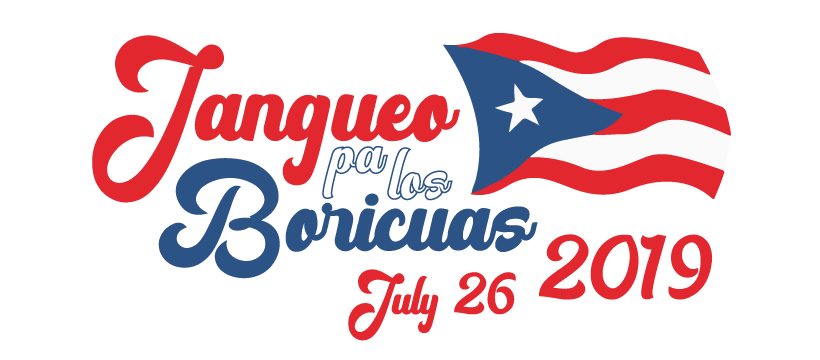
“I lived through it,” the man said. “They saved us. All we can give them is our thanks.” This was the second annual party. There’s no direct English translation for the words on the shirts, he said, but the meaning is sort of a cross between “we love you” and “we’re grateful for you.” I think I got it, I said.
—
It was 14 days after Irma that Hurricane Maria again struck the BVIs, but the eye of the storm missed as it headed ferociously toward Puerto Rico.
Rosselló officially resigned August 2. Pedro Pierluisi was sworn in, and just a few days later he was given the boot when the Supreme Court determined his swearing-in to be unconstitutional. The unpopular Wanda Vásquez was sworn in on August 7. I’ve read some solid coverage and background in both The New York Times and TIME—both are worth reading to follow the continued coverage of the Puerto Rican administration. And this photo spread in The Atlantic is pretty cool.
Here’s a compelling article from the L.A. Times linking the current crisis with stories of Maria.
 Learning the Language